We use cookies for analytics and marketing to improve your experience and measure content. You can accept or decline non-essential cookies.
We use cookies for analytics and marketing to improve your experience and measure content. You can accept or decline non-essential cookies.
Alibaba’s Qwen Image 3.0 can produce newspaper‑style pages and infographic grids in a single pass while rendering text as small as 10 pixels, but the model’s weights and benchmarks remain undisclosed.
The Crypto Frontiers Editorial Desk · Published July 23, 2026 at 9:37 AM UTC · Updated July 23, 2026 at 9:37 AM UTC
Alibaba’s latest AI image model, Qwen Image 3.0, promises practical output over visual flair.
Qwen Image 3.0 is designed to create complex visual compositions that would normally require multiple generation passes. According to the source, the system can output a dense newspaper page—or an entire infographic grid—in one shot, a task that typically demands iterative prompting or post‑processing. In addition, the model can render textual elements down to a size of ten pixels, suggesting a level of fine‑grained control over typography that many image generators lack.
While the functional description is clear, the source notes two critical gaps. First, Alibaba has not released any benchmark results that compare Qwen Image 3.0 to existing image‑generation models on standard metrics such as fidelity, diversity, or speed. Second, the model’s weights remain closed; they are not available for the research community to inspect or fine‑tune. Without these data points, it is impossible to verify the claimed capabilities or to assess how the model performs relative to alternatives.
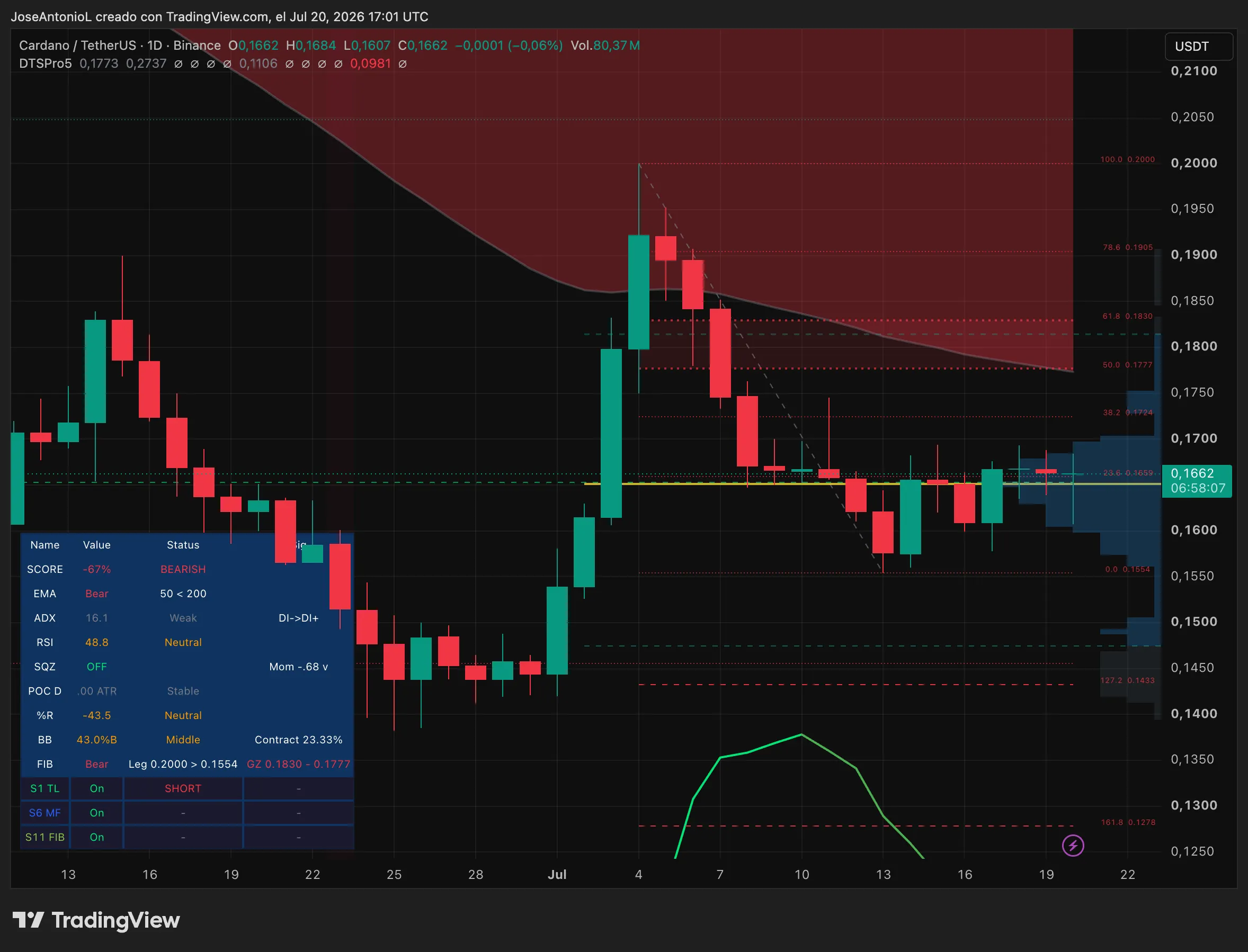
Cardano executed a hard fork on July 20, 2026, driven entirely by a community vote—the first time a major protocol update occurred without any company initiating the switch.

Cardano’s network shifted to version 11 on Saturday through the Van Rossem hard fork, marking the first upgrade approved by community voting rather than the development company.
If the described capabilities hold up under independent testing, Qwen Image 3.0 could streamline workflows that involve dense textual layouts—such as automated newspaper production, data‑driven reports, or complex infographics. The ability to render tiny text may reduce the need for separate OCR or post‑processing steps. However, the absence of benchmarks means that potential users cannot gauge efficiency gains, cost implications, or quality trade‑offs. Organizations that prioritize transparency and reproducibility may be hesitant to adopt a model whose internal parameters are undisclosed.
The announcement raises several unanswered questions. How does Qwen Image 3.0 handle multilingual text at the ten‑pixel scale? What are the computational requirements for generating the dense layouts described? Will Alibaba eventually release the model’s weights or provide benchmark data to enable third‑party validation? Until these details emerge, the model remains an intriguing but unverified addition to the AI image‑generation landscape.
In summary, Alibaba’s Qwen Image 3.0 showcases a novel ability to produce complex, text‑heavy visuals in a single pass, yet the lack of open benchmarks and weights leaves its practical value open to interpretation.