We use cookies for analytics and marketing to improve your experience and measure content. You can accept or decline non-essential cookies.
We use cookies for analytics and marketing to improve your experience and measure content. You can accept or decline non-essential cookies.
Vietnam now fines domestic crypto traders $1,140‑$1,900 for operating without a licensed service provider, a penalty level likened to drunk‑driving sanctions.
The Crypto Frontiers Editorial Desk · Published July 20, 2026 at 8:00 PM UTC · Updated July 20, 2026 at 8:00 PM UTC
%20at%20a%20moderate%20aperture%20%E2%80%94%20real%2C%20believable%20optics%2C%20not%20an%20illustration%2C%203D%20render%2C%20painting%2C%20or%20cartoon.%20Compose%20around%20ONE%20real%2C%20physical%2C%20tangible%20focal%20point%20rendered%20in%20crisp%20detail%3A%20e.g.%20a%20single%20physical%20Bitcoin%2FEthereum%2FXRP%20coin%20on%20a%20surface%2C%20a%20server%20rack%2C%20a%20graphics%20card%2C%20a%20stack%20of%20hardware%2C%20a%20modern%20office-building%20exterior%2C%20a%20trophy%2C%20a%20single%20gaming%20keyboard%20or%20controller.%20Photograph%20the%20actual%20object%20the%20story%20is%20about%20%E2%80%94%20concrete%20and%20literal%2C%20never%20an%20abstract%20metaphor%20or%20generic%20%22tech%22%20montage.%20CRITICAL%20%E2%80%94%20this%20model%20cannot%20render%20text%20or%20logos%3A%20it%20produces%20garbled%20fake%20letters%20and%20invented%20brand%20marks.%20So%20the%20frame%20must%20contain%20NO%20readable%20text%2C%20NO%20screens%20or%20monitors%20showing%20UI%2C%20NO%20signage%2C%20NO%20logos%2C%20NO%20brand%20names%2C%20NO%20labels%2C%20NO%20watermarks%2C%20NO%20numbers%2C%20NO%20charts%2C%20NO%20user%20interfaces%20of%20any%20kind.%20Never%20depict%20a%20company%20logo%2C%20storefront%20sign%2C%20product%20screen%2C%20or%20branded%20surface%20%E2%80%94%20if%20a%20brand%2Fcompany%2Fproduct%20is%20the%20subject%2C%20show%20a%20neutral%20real-world%20physical%20object%20associated%20with%20its%20industry%20(hardware%2C%20a%20coin%2C%20a%20building%2C%20an%20arena)%20with%20all%20surfaces%20blank%20and%20unbranded.%20Keep%20the%20background%20simple%20and%20softly%20out%20of%20focus%20(shallow%20depth%20of%20field%2C%20gentle%20bokeh)%20so%20the%20single%20subject%20stays%20clean%20and%20uncluttered%20%E2%80%94%20no%20crowds%2C%20no%20group%20of%20people%2C%20no%20wall%20of%20screens.%20At%20most%20one%20person%2C%20shown%20only%20from%20behind%2C%20in%20silhouette%2C%20or%20partially%2Fturned%20away%20%E2%80%94%20never%20a%20clear%20identifiable%20face%2C%20and%20never%20a%20specific%20named%20real%20individual.%20A%20subject%20with%20no%20people%20at%20all%20is%20preferred%20when%20the%20story%20is%20about%20an%20object%2C%20asset%2C%20or%20company.%20Do%20not%20fabricate%20an%20event%2C%20action%2C%20relationship%2C%20endorsement%2C%20or%20emotional%20reaction%20not%20supported%20by%20the%20article.%20Do%20not%20present%20the%20image%20as%20documentary%20evidence%20of%20a%20specific%20real%20moment.%20Clean%2016%3A9%20editorial%20header%20composition%2C%20publication-ready%2C%20magazine-cover%20polish.%20Avoid%3A%20blur%2C%20motion%20blur%2C%20warped%20shapes%2C%20distorted%20geometry%2C%20extra%20fingers%2C%20deformed%20hands%2C%20low%20resolution%2C%20noise%2C%20jpeg%20artifacts%2C%20oversaturation%2C%20text%2C%20letters%2C%20watermark%2C%20logo%2C%20signature%2C%20cartoon%2C%20illustration%2C%203d%20render.?width=1344&height=704&nologo=true&seed=65275399&safe=true&model=flux)
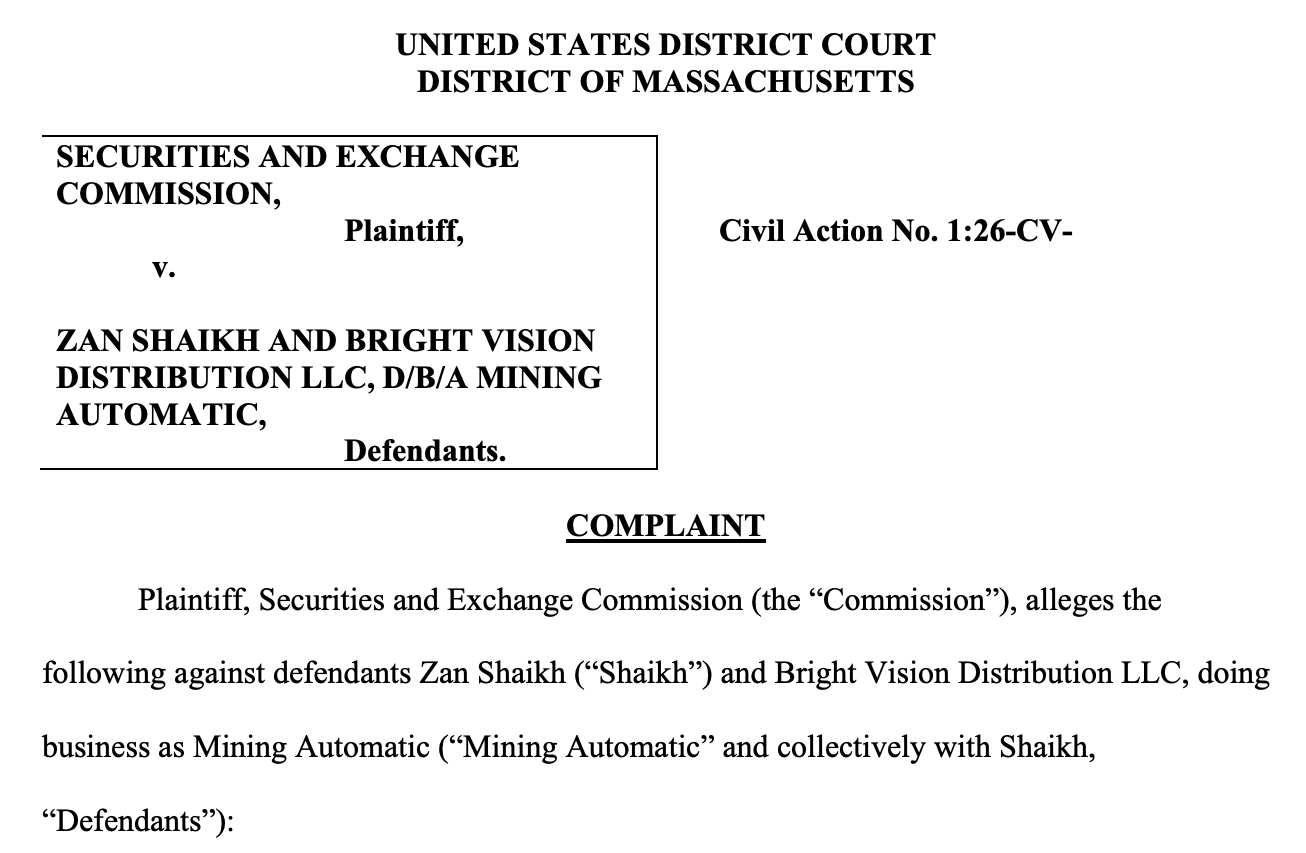
The SEC alleges Mining Automatic and its founder raised $22 million from investors by promising guaranteed crypto mining returns, yet used only a fraction of the money for actual mining operations.

Coinbase vice chair Ryan VanGrack says Democratic lawmakers have inserted consumer protection provisions into a Senate digital‑asset market structure bill.
Vietnam has introduced a new penalty regime targeting domestic investors who trade cryptocurrency without using a licensed service provider.
Vietnam’s regulator has clarified that any domestic individual who conducts cryptocurrency transactions without routing them through a licensed service provider will be subject to a monetary sanction. The fine bracket is set at roughly $1,140 to $1,900 per violation. This amount is intended to serve as a deterrent and aligns with the government’s broader effort to tighten oversight of digital asset activities.
The announced fine range is described as being on par with penalties for drunk‑driving. In Vietnam, drunk‑driving offenses commonly attract monetary penalties within a similar band, reinforcing the message that unlicensed crypto trading is treated with comparable seriousness. By equating the two, authorities signal that crypto‑related misconduct will not be tolerated lightly.
For investors operating inside Vietnam, the rule creates a clear compliance requirement: they must engage only with service providers that have obtained the appropriate license. Failure to do so now carries a concrete financial cost. Traders who previously used informal or offshore platforms may need to reassess their strategies to avoid the stipulated fines.
The announcement does not detail the enforcement mechanisms or the timeline for applying the fines. It also leaves unanswered whether existing violations will be retroactively penalized. Observers will watch for regulatory guidance on how licensed providers are identified and how compliance checks will be carried out.
In summary, Vietnam’s new crypto‑trading fines of $1,140‑$1,900 place unlicensed activity on an equal footing with drunk‑driving offenses, underscoring the government’s intent to enforce stricter controls on domestic digital‑asset markets.