We use cookies for analytics and marketing to improve your experience and measure content. You can accept or decline non-essential cookies.
We use cookies for analytics and marketing to improve your experience and measure content. You can accept or decline non-essential cookies.
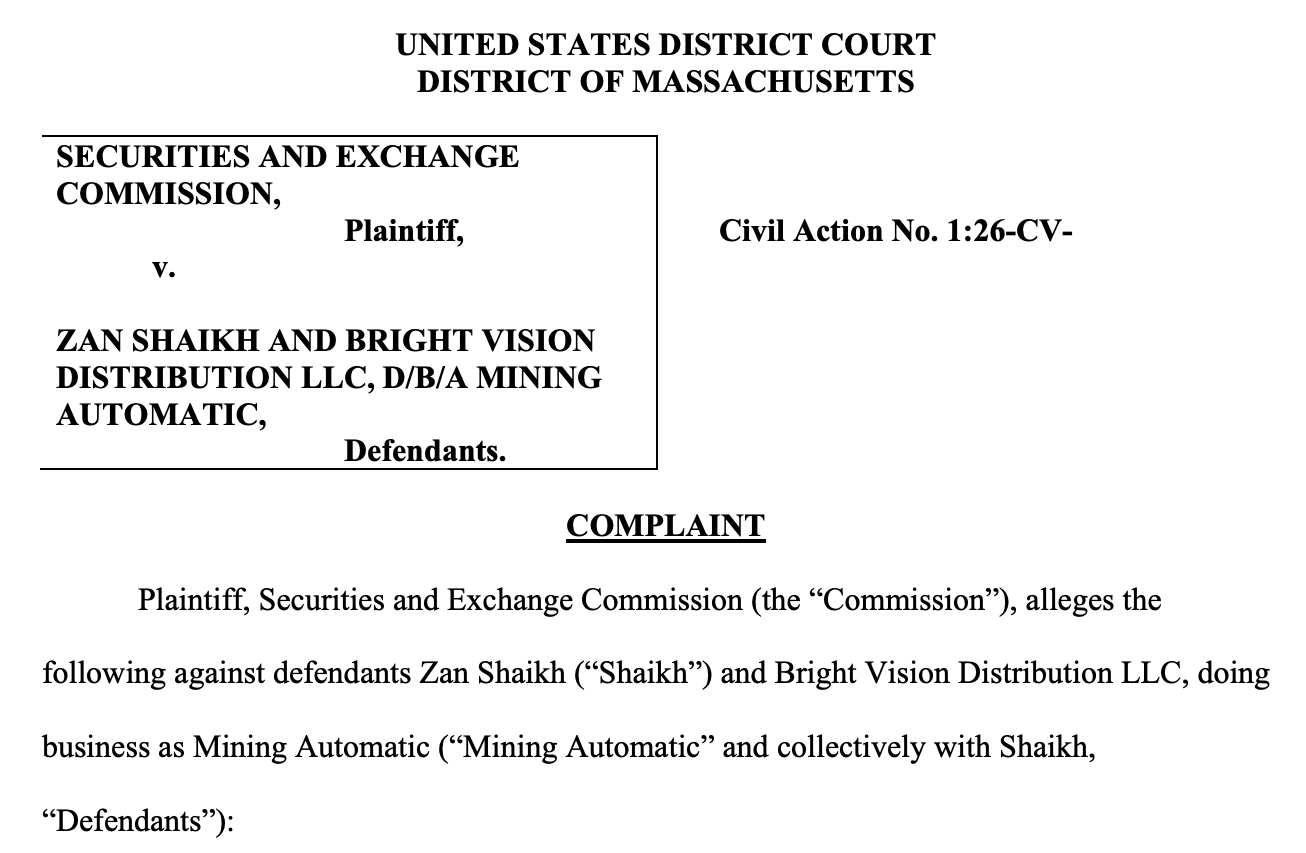
The SEC alleges Mining Automatic and its founder raised $22 million from investors by promising guaranteed crypto mining returns, yet used only a fraction of the money for actual mining operations.
The Crypto Frontiers Editorial Desk · Published July 21, 2026 at 6:57 AM UTC · Updated July 21, 2026 at 6:57 AM UTC
The U.S. Securities and Exchange Commission has taken legal action against Mining Automatic and its founder, alleging a multi‑million‑dollar fraud scheme.
The commission’s complaint states that Mining Automatic solicited capital from investors with the assurance that crypto mining would generate predictable, high‑yield returns. The filing alleges that the company collected roughly $22 million, but the majority of that capital was not allocated to mining hardware or operations. Instead, the funds were purportedly diverted to other purposes, leaving the promised mining output largely unfulfilled.
The SEC’s action fits within a broader pattern of enforcement against crypto ventures that market themselves as low‑risk, high‑return investments. Under U.S. securities law, offering securities without proper registration is prohibited, and promises of guaranteed profits often trigger scrutiny. The agency has previously targeted similar schemes that resemble traditional Ponzi structures, emphasizing that crypto projects are not exempt from existing investor protections.
For participants who contributed to Mining Automatic, the allegations suggest a significant risk of financial loss. If the court finds that the company misrepresented the use of investor funds, affected parties could seek restitution through the litigation process. The case also serves as a cautionary example for prospective investors, illustrating the dangers of schemes that promise fixed returns in a market known for volatility.
While the complaint outlines the core accusations, several details remain unresolved. The exact proportion of funds diverted from mining activities has not been disclosed, and the founder’s specific role in the alleged misappropriation is still under investigation. The litigation will likely involve discovery, where additional financial records may be examined. Observers will be watching for any settlement offers or court rulings that could set precedents for future crypto‑related securities cases.
In summary, the SEC’s lawsuit against Mining Automatic underscores the agency’s vigilance over unregistered crypto offerings that promise guaranteed returns. Investors should remain wary of such promises and consider the regulatory environment when evaluating crypto investment opportunities.

Coinbase vice chair Ryan VanGrack says Democratic lawmakers have inserted consumer protection provisions into a Senate digital‑asset market structure bill.
Celsius co‑founders Alex Leon and Nuke Goldstein will pay the FTC more than $6 million, adding to the $10 million settlement previously reached by former CEO Alex Mashinsky.