We use cookies for analytics and marketing to improve your experience and measure content. You can accept or decline non-essential cookies.
We use cookies for analytics and marketing to improve your experience and measure content. You can accept or decline non-essential cookies.
Vietnam penalizes retail users of offshore exchanges like Binance and OKX, while Malaysia grapples with a school controversy over an Israeli citizen ban.
The Crypto Frontiers Editorial Desk · Published July 21, 2026 at 3:00 AM UTC · Updated July 21, 2026 at 3:00 AM UTC
Retail traders in Vietnam who use offshore crypto platforms such as Binance or OKX are confronting significant penalties, a development that highlights the tightening regulatory climate across Southeast Asia. At the same time, a separate controversy has erupted in Malaysia involving Network School’s decision to ban an Israeli citizen, underscoring how political and regulatory issues intersect with the region’s crypto ecosystem.
The source report confirms that retail users in Vietnam who trade on offshore crypto exchanges—including Binance and OKX—face heavy penalties. While the exact monetary amount is not detailed in the article body, the description of “heavy penalties” indicates a substantial financial deterrent. This enforcement aligns with Vietnam’s historically cautious approach to digital assets, where the government has emphasized the need for clear regulatory frameworks. The penalties serve as a practical reminder that participation in unregistered platforms can attract state action.
A separate piece of evidence notes a controversy at Network School in Malaysia concerning a ban on an Israeli citizen. The incident, though unrelated to cryptocurrency trading, illustrates how broader geopolitical considerations can influence institutional policies within the region. The school’s decision has drawn public attention, highlighting the sensitivity of cross‑border affiliations and the potential for non‑financial issues to intersect with the crypto sector’s perception.
For crypto participants, the Vietnamese penalties underscore the importance of compliance with local regulations. Retail traders who might assume that global platforms operate uniformly across jurisdictions now face concrete financial risk. Meanwhile, the Malaysian school controversy, while not a regulatory action, signals that political and social dynamics can quickly become entangled with the crypto narrative, especially when institutions are perceived to be linked to international actors.
The source material does not specify the exact fine amounts, the legal basis for the penalties, or the procedural steps for enforcement in Vietnam. Likewise, details about the Network School case—such as the rationale behind the ban or any legal challenges—are absent. Consequently, readers should treat the reported facts as a snapshot rather than a comprehensive overview. Future reporting may clarify the scale of the fines, the regulatory statutes invoked, and whether similar actions are being considered in neighboring countries.
Given the heavy penalties in Vietnam and the heightened awareness of political sensitivities in Malaysia, stakeholders should monitor regional regulatory announcements closely. Crypto exchanges operating in Southeast Asia may need to adapt compliance strategies, and users should assess the risk of engaging with offshore platforms. The evolving landscape suggests that both financial and non‑financial factors will continue to shape the region’s crypto environment.
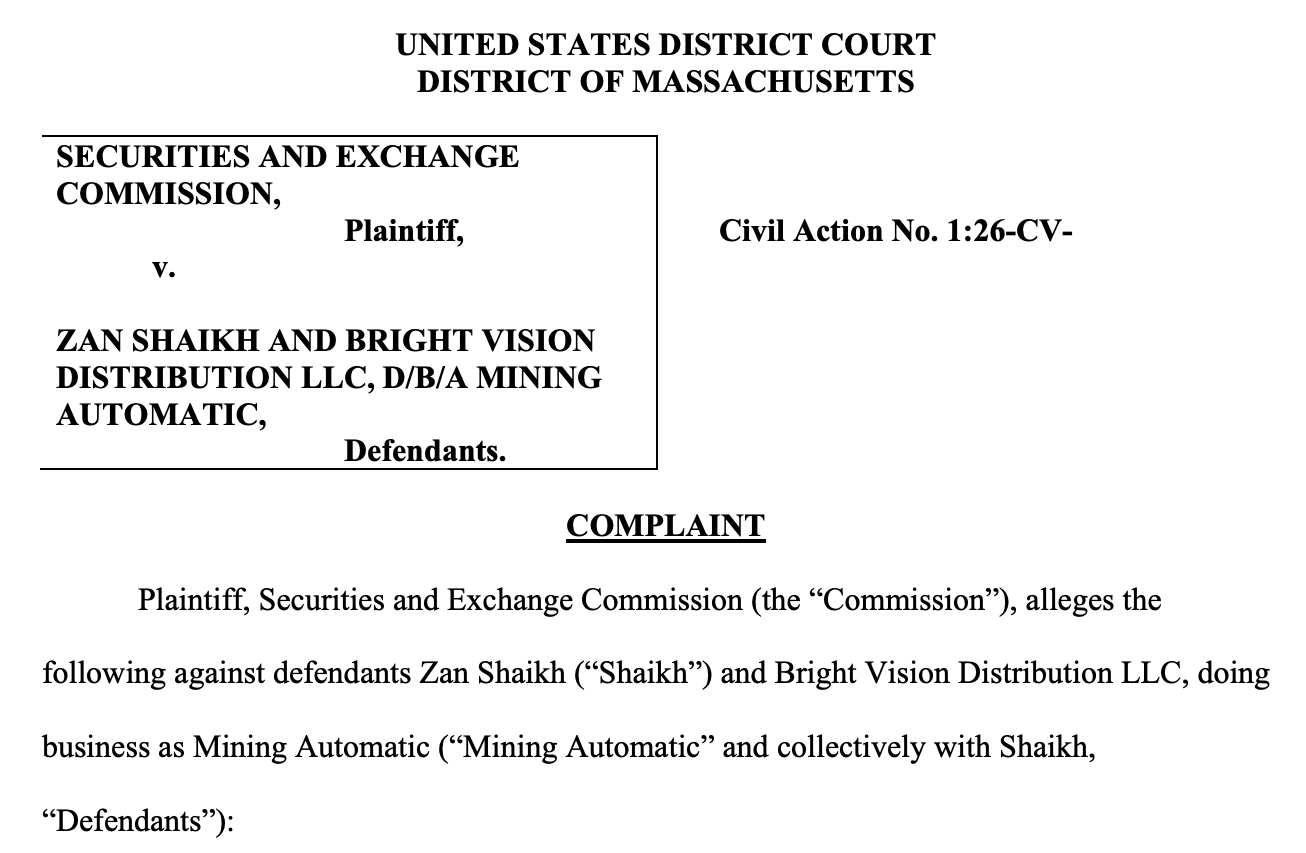
The SEC alleges Mining Automatic and its founder raised $22 million from investors by promising guaranteed crypto mining returns, yet used only a fraction of the money for actual mining operations.

Coinbase vice chair Ryan VanGrack says Democratic lawmakers have inserted consumer protection provisions into a Senate digital‑asset market structure bill.